

A small kitchen can quickly become frustrating when crowded countertops, overflowing cabinets, and poorly organized drawers make everyday tasks more difficult. Fortunately, improving storage doesn't always require expensive renovations or additional cabinetry. The right organizational tools can help you take advantage of overlooked spaces while keeping frequently used items accessible. From pull-out shelves to wall-mounted organizers, several practical solutions can make even a compact kitchen feel more spacious, efficient, and enjoyable to use.
1. Install Pull-Out Shelves in Deep Cabinets
Deep kitchen cabinets often create storage problems because items at the back become difficult to see and retrieve. Pull-out shelves solve this issue by bringing stored items forward, reducing the need to rearrange everything whenever you need something.
Consider installing sliding cabinet organizers in lower cabinets used for pots, pans, canned goods, or small appliances. Many organizers feature adjustable mounting brackets, while others are designed for specific cabinet dimensions. Measure the cabinet's interior width, depth, and opening before selecting a product.
For renters or homeowners avoiding permanent modifications, freestanding sliding baskets can offer a simpler alternative. Position heavier items on lower shelves and confirm that installed organizers can support their weight. This approach makes deep storage more accessible while reducing unnecessary countertop clutter.
2. Use Vertical Dividers for Cutting Boards and Baking Sheets
Stacking cutting boards, baking sheets, and serving trays horizontally often creates frustrating piles. Removing one item may require lifting several others, especially when cabinet space is limited. Vertical dividers offer a practical way to store these items upright.
Choose adjustable metal racks, wooden dividers, or freestanding organizers that fit inside existing cabinets. Position baking sheets, muffin tins, and cutting boards in separate slots so individual items can be removed without disturbing everything else.
This approach works particularly well in narrow lower cabinets where conventional shelving provides limited flexibility. Vertical storage systems can also make better use of deep drawers intended for cookware. Keep heavier boards toward the bottom of an organizer and ensure the rack remains stable when items are removed.
3. Add Hooks and Racks to Cabinet Doors
The inside surfaces of cabinet doors are frequently overlooked, even though they can provide convenient storage for smaller kitchen essentials. Door-mounted organizers can free up shelf space while keeping frequently used items within easy reach.
Install shallow racks for spices, measuring spoons, cleaning cloths, or lightweight food-storage accessories. Adhesive hooks may work for lighter objects, while screw-mounted organizers can provide greater stability when installed appropriately.
Before purchasing anything, check whether the organizer will interfere with existing shelves, hinges, or stored items when the door closes. Avoid placing heavy objects on doors that aren't designed to support additional weight. Under-sink cabinets can accommodate certain cleaning supplies, but hazardous products should remain secured away from children and pets.
4. Create Wall Storage With Pegboards and Rails
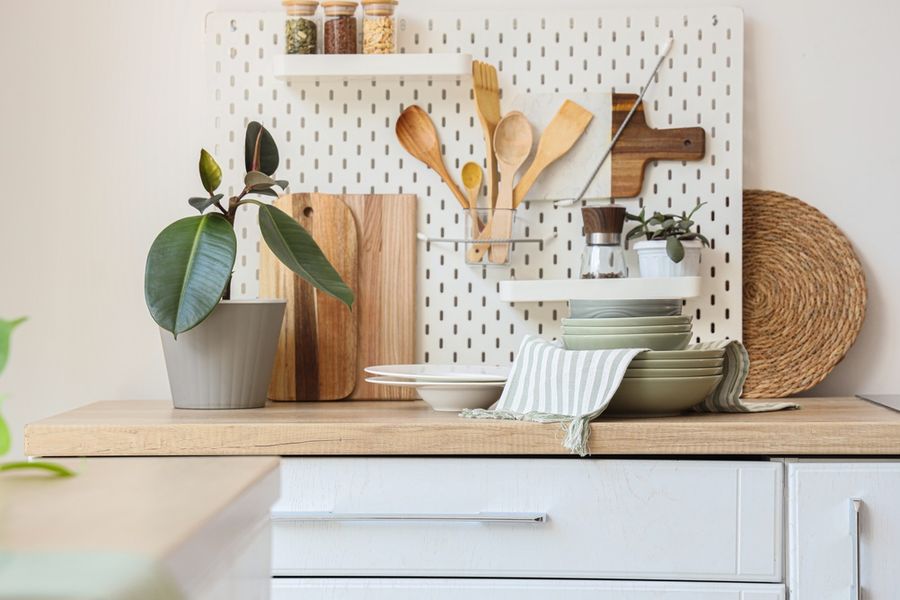
When cabinet space is limited, unused wall areas can become valuable storage locations. Pegboards, utensil rails, and small wall-mounted shelves allow frequently used tools to remain accessible without occupying countertops.
A kitchen pegboard system can accommodate hooks, baskets, and compact shelves for utensils, measuring cups, and lightweight cookware. Because accessories can be repositioned, the layout can change as your storage needs evolve.
Install the system near your main preparation area, but avoid locations where stored items could interfere with cooking or become exposed to excessive heat. Use appropriate wall anchors and follow the manufacturer's weight recommendations. Magnetic knife strips can also save drawer space, provided they're securely mounted away from children's reach.
5. Use Stackable Organizers to Maximize Cabinet Height
Many kitchen cabinets have substantial unused space between shelves, particularly when they hold short dishes, mugs, or pantry containers. Stackable organizers help divide this vertical space into smaller, more functional storage levels.
Freestanding shelf risers are useful for plates, bowls, and cups. In pantry cabinets, stackable baskets can separate packaged foods, baking ingredients, and snacks. Under-shelf baskets provide another option by utilizing space beneath existing shelves.
Choose organizers that suit the dimensions of your cabinets rather than purchasing matching containers without measuring. Avoid stacking heavy or unstable objects above shoulder height. The objective is to make existing storage easier to use, not simply fit more possessions into already crowded cabinets.
Grouping similar items can make the system more effective. For example, keep breakfast ingredients together and designate another area for baking supplies. This reduces unnecessary searching and makes it easier to recognize when supplies need replenishing.
6. Add a Slim Rolling Cart for Flexible Storage
A narrow rolling cart can provide additional storage without requiring permanent changes to a small kitchen. These carts are particularly useful when there's an accessible gap beside a refrigerator, at the end of a cabinet run, or along an otherwise unused wall.
Choose a model with multiple shelves and locking wheels, if available. Use the upper level for frequently needed items and lower shelves for heavier supplies. Depending on the cart's design, it might hold pantry staples, kitchen towels, packaged snacks, or lightweight cookware.
Rolling storage carts can also function as movable preparation stations when they have a sturdy, food-safe work surface. However, they shouldn't obstruct walkways, appliance doors, or emergency exits.
Before purchasing, measure the available opening and confirm that the cart has enough clearance to move freely. A compact cart is most useful when it improves accessibility rather than creating another obstacle.
Make Every Inch of Your Kitchen Work Harder
Improving a small kitchen begins with understanding where storage space is being wasted. Pull-out shelves, vertical dividers, cabinet-door racks, wall organizers, stackable shelves, and rolling carts address different organizational challenges without necessarily requiring major renovations.
Start with the area that causes the most frustration, whether it's crowded countertops or difficult-to-reach cookware. Measure carefully, choose organizers suited to the items you actually use, and avoid introducing unnecessary clutter. With thoughtful adjustments, even a modest kitchen can become more organized, practical, and comfortable for everyday cooking.