

Maintaining good balance becomes increasingly important with age, especially as changes in muscle strength, coordination, and mobility can make everyday movements less predictable. Fortunately, improving stability doesn't require expensive equipment, complicated workout routines, personal fitness coaches, or physical therapy classes. Several simple exercises can help older adults feel steadier on their feet, maintain independence, and reduce their risk of falling when practiced consistently and safely.
Standing on One Leg to Improve Stability
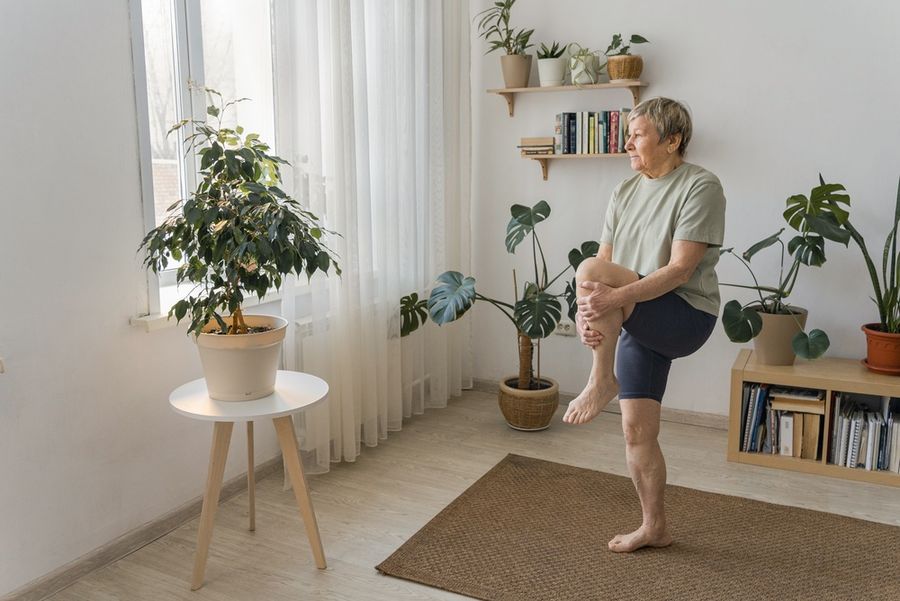
Standing on one leg is one of the simplest ways to challenge balance without specialized equipment. This exercise encourages the muscles around the ankles, hips, and core to work together to maintain an upright position. It can also help older adults become more comfortable adjusting their weight while standing.
Begin beside a sturdy countertop or heavy chair that will not slide. Place your feet hip-width apart, then slowly lift one foot a few inches off the floor. Try holding the position for 10 seconds before switching legs. Beginners can maintain a firm grip on their support, gradually reducing assistance as their balance improves. The standing balance exercise is commonly recommended as a practical way to develop stability.
Heel-to-Toe Walking for Better Coordination
Heel-to-toe walking, sometimes called tandem walking, challenges the body's ability to remain balanced while moving along a narrow path. Unlike ordinary walking, it requires careful foot placement and greater attention to posture. This makes it particularly useful for developing coordination during everyday movements.
Start beside a wall or countertop, placing one foot directly in front of the other so the front heel nearly touches the back toes. Keep your eyes forward and slowly take five steps. Use the nearby support whenever necessary, increasing the number of steps as your confidence grows. Practicing this heel-to-toe walking technique can help improve control without requiring much space.
Sit-to-Stand Exercises for Stronger Legs
Getting out of a chair is an everyday movement that depends on leg strength and body control. Practicing this movement can strengthen the muscles used when standing, sitting, and changing positions. It also helps older adults maintain the physical abilities needed for independent living.
Choose a sturdy chair without wheels and place it against a wall. Sit upright with both feet flat on the floor, approximately hip-width apart. Lean forward slightly and rise slowly, using the armrests if needed. Lower yourself back into the chair with control rather than dropping into the seat. Begin with five repetitions and gradually increase as the movement becomes easier.
Sideways Walking to Improve Lateral Balance
Many everyday activities involve moving sideways, whether stepping around furniture, navigating a crowded room, or reaching for something nearby. Sideways walking provides an opportunity to practice these movements in a controlled environment while engaging the hips and legs.
Stand beside a kitchen counter with your knees slightly bent. Take a small step to one side, then bring your other foot toward it without crossing your legs. Continue for five to ten steps before reversing direction. Keep your movements slow and controlled, avoiding sudden shifts of weight. This exercise can be especially useful for people who feel less confident moving in directions other than forward.
Heel Raises to Strengthen the Lower Legs
Strong calf muscles and stable ankles contribute to everyday activities such as walking, climbing stairs, and maintaining an upright posture. Heel raises offer a straightforward way to strengthen these areas while practicing controlled movement.
Stand behind a sturdy chair or at a countertop, keeping your feet approximately hip-width apart. Slowly lift both heels off the floor, transferring your weight onto the balls of your feet. Pause briefly before lowering your heels with control. Start with eight repetitions and increase gradually as your strength improves. Avoid rocking forward or using momentum, and maintain support throughout the exercise.
Tai Chi for Gentle, Controlled Movement
Tai chi combines slow movements, deliberate weight shifts, and controlled breathing. Unlike exercises that focus on holding a single position, tai chi encourages continuous movement between different postures. This can help develop coordination, body awareness, and confidence while moving.
Beginners can explore introductory classes at community centers, recreation facilities, or senior fitness programs. Many routines can be adapted for different mobility levels, including seated versions. Regular tai chi practice is among the recommended approaches to reducing fall risk, making it a worthwhile addition to a balanced exercise program.
Building a Safe and Consistent Balance Routine
Balance exercises are most useful when practiced regularly rather than occasionally. Aim for approximately three sessions each week, starting with short routines that match your abilities. Gradually add repetitions or introduce more challenging movements as your stability develops. Combining balance training with walking and strength exercises can provide broader physical benefits.
Safety should remain the priority. Exercise on a clear, nonslip surface, wear supportive footwear, and keep sturdy support within reach. Anyone experiencing frequent falls, significant dizziness, or difficulty standing should consult a healthcare professional before attempting new exercises. Never continue a movement that causes pain or makes you feel unsafe.
Small Steps Toward Greater Confidence and Independence
Improving balance after 60 doesn't require mastering difficult movements or purchasing specialized fitness equipment. Simple exercises such as standing on one leg, heel-to-toe walking, and controlled chair rises can support better stability when performed consistently.
The most effective approach is one that feels manageable, remains safe, and becomes part of everyday life. Over time, regular practice can help older adults maintain confidence, protect mobility, and reduce the likelihood of preventable falls.